 National Addiction Treatment Centers
1150 Graham Road, Suite 102, Florissant, MO, 63031
Active
- Outpatient
- Medication-assisted treatment
- Medicaid
- Medicare
City
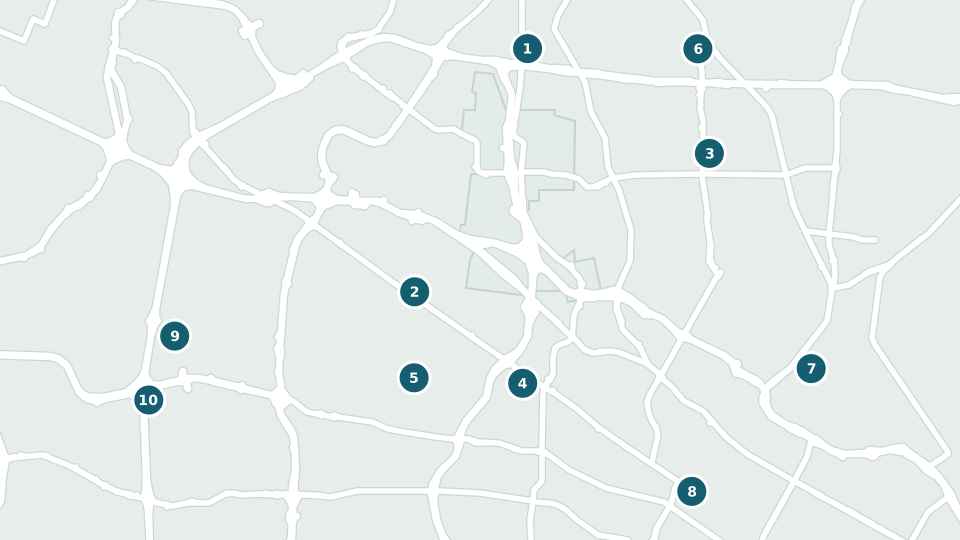
10 options near Berkeley, MO, nearest first. Compare services and locations, then call to check availability.
Call (888) 315-1695Ask about your optionsThis number connects to our central helpline, not directly to a listed facility.
Check which services are available for your needs.
Confirm payment options and any waiting time directly.
Ask what information the program needs from you.
If you are looking into addiction treatment centers in the Berkeley area, it helps to know what to ask when you contact a program. On a first call or visit, you can ask what types of care the program offers, whether it provides outpatient counseling, medication-based treatment, or more structured residential options, and how the staff decides which level of care fits your situation. You can also ask what an intake appointment involves, what paperwork or identification to bring, and roughly how long the first visit will take.
Programs vary in how they handle scheduling, cost, and insurance questions, so it is fair to ask about those directly before you commit to anything. You might also ask whether family members or a support person can take part, and what happens after the first visit so you know the next step. If a particular program does not offer the kind of help you need, ask whether they can point you toward other options nearby.
Local evidence about specific first-visit details for programs near Berkeley was not available, so call ahead to confirm the specifics of what each provider requires.
Call (888) 315-1695
Addiction treatment centers usually offer care at different levels of intensity, and the right one depends on how much support you need. Outpatient programs let you live at home while attending sessions during the week, which works for many people with steady routines. Intensive outpatient and partial hospitalization programs involve more hours of treatment each week while still allowing you to sleep at home.
Residential care means living at the facility for the length of the program, which removes you from daily triggers and gives round-the-clock structure. When comparing options, ask what levels of care each center actually provides, how long each level lasts, and how staff decide when someone should move up or down to a different level.
Call (888) 315-1695Check which services each program reports offering.
Consider travel distance and whether care is in person or remote.
Ask the program directly about payment and coverage.
Confirm how to contact the program and what to expect.
Questions worth asking on a first call: Do you treat the substance or situation I am dealing with? What levels of care do you offer, from outpatient through residential? What does a typical week in the program look like?
What does the program cost in total, and what insurance do you accept? How long does the program usually last, and what happens if I need to stop or change levels? Who will actually be providing my care, and what are their qualifications?
Is family involved in any part of treatment? What support do you offer after the program ends? Getting straight answers to these before enrolling makes comparison much easier.
If you are considering addiction treatment centers in Missouri, understanding your payment options is a practical first step. Many residents use private insurance, which commonly includes mental health and substance use benefits that can significantly offset the cost of care, and public programs may provide coverage for those who qualify. Each policy has its own rules about deductibles, copays, and approved services, so it is wise to confirm your eligibility and benefits ahead of time.
For uninsured individuals, sliding-scale fees based on financial need are frequently offered, and paying out of pocket through self-pay is another route available at many programs.
When you compare addiction treatment centers near you, start with fit rather than convenience. Ask whether the program treats the specific substance or behavior you are concerned about, since some centers specialize. Check what levels of care they offer so you are not referred somewhere else halfway through.
Ask who provides the treatment, what their credentials are, and how many clients each staff member works with. Find out what a typical week looks like, including individual therapy, group sessions, and any family involvement. Also ask practical questions: what the total cost is, what insurance they accept, how long the program runs, and what support exists after the main program ends.
A center that answers these questions clearly and without pressure is usually easier to work with.
If you are looking into addiction treatment centers in the Berkeley area, it helps to know what to ask when you contact a program.

If you or someone else is in immediate danger, call 911 right away. This includes situations like an overdose, a serious injury, or any moment when someone's life or safety is at risk. Stay on the line and follow the dispatcher's instructions.
You can also go to the nearest emergency room for urgent medical help. For a mental health or suicidal crisis, calling or texting 988 connects you with trained crisis counselors at any hour. These services exist for exactly these moments, and using them is never an overreaction.
If you or someone else is in immediate danger, call 911 now.
Call (888) 315-16951150 Graham Road, Suite 102, Florissant, MO, 63031
Active
9733 Saint Charles Rock Road, Saint Louis, MO, 63114
Active
10208 West Florissant Avenue, Saint Louis, MO, 63136
Active
8240 Saint Charles Rock Road, Saint Louis, MO, 63114
Active
9553 Lackland Road, Suite 3, Saint Louis, MO, 63114
Active
11701 West Florissant Avenue, Florissant, MO, 63033
Active
5736 West Florissant Avenue, Saint Louis, MO, 63120
Active
5920 Dr Martin Luther King Drive, Saint Louis, MO, 63112
Active
140 Weldon Parkway, Maryland Heights, MO, 63043
Active
2055 Craigshire Road, Suite 410, Saint Louis, MO, 63146
Active
These lists use only what the 10 active facilities listed for Berkeley report to SAMHSA's FindTreatment.gov. No facility pays to be included or can ask to be moved. Reporting more options is not a measure of quality, outcomes or suitability for any person. A missing option means the facility did not report it to the source, not that it is not offered. Call the facility to confirm everything before relying on it.
How this list is made: each facility scores one point for each of these 5 levels of care (settings) it reports to SAMHSA's FindTreatment.gov (Residential (24-hour); Outpatient; Intensive outpatient; Partial hospitalization / day treatment; Hospital inpatient). A facility needs at least 3 to appear. Facilities are shown from the highest count to the lowest; facilities with the same count are in alphabetical order, which has no other meaning. Up to 10 are shown.
How this list is made: each facility scores one point for each of these 7 payment and cost-assistance options it reports to SAMHSA's FindTreatment.gov (Medicaid; Medicare; Private health insurance; Military insurance (TRICARE); Cash or self-payment; Sliding fee scale; Payment assistance). A facility needs at least 4 to appear. Facilities are shown from the highest count to the lowest; facilities with the same count are in alphabetical order, which has no other meaning. Up to 10 are shown.
How this list is made: each facility scores one point for each of these 4 medications used in treatment it reports to SAMHSA's FindTreatment.gov (Buprenorphine; Methadone; Naltrexone; Medication for alcohol use disorder). A facility needs at least 2 to appear. Facilities are shown from the highest count to the lowest; facilities with the same count are in alphabetical order, which has no other meaning. Up to 10 are shown.
How this list is made: each facility scores one point for each of these 12 age groups and client groups accepted it reports to SAMHSA's FindTreatment.gov (Adolescents; Young adults; Adults; Seniors; Pregnant or postpartum women; Adult women; Adult men; Veterans; Active duty military; Criminal justice clients; Clients who have experienced trauma; Co-occurring mental and substance use disorders). A facility needs at least 5 to appear. Facilities are shown from the highest count to the lowest; facilities with the same count are in alphabetical order, which has no other meaning. Up to 10 are shown.
Start by calling a few programs and describing your situation honestly. Ask what levels of care they offer, what an assessment involves, and how they would recommend proceeding for someone with your needs and schedule. Comparing the answers you get on those calls is often the clearest way to narrow your choices.
It varies by program, so ask when you schedule the visit. Common items include a photo ID, insurance information if you have it, a list of any medications you take, and basic contact details. If money or insurance is a concern, say so up front and ask what options exist before your visit.
The first call is mostly an intake conversation, and it usually takes twenty to forty minutes. Staff will ask about your substance use history, health, medications, and what kind of support you are looking for. It is also your chance to ask about costs, insurance, schedules, and what the program includes, so write your questions down beforehand.
It depends on the level of care. Outpatient programs are built around jobs and families, with sessions in the mornings, evenings, or on weekends. Day programs require a bigger weekly commitment, usually several hours a day on weekdays. Residential programs ask you to step away from work entirely for the length of your stay, so you would need to arrange time off or leave. Ask each center directly how their schedule would fit your situation.
The length depends on the level of care and your needs rather than a fixed standard. Outpatient programs often run in blocks of several weeks to a few months, with set session counts. Residential programs commonly range from a few weeks to ninety days or longer, depending on progress and circumstances. Ask each center how they determine program length and whether it can be extended or shortened based on how things go.
Last updated