 National Addiction Treatment Centers

3635 Old Court Road, Suite 308, Pikesville, MD, 21208
Active
- Outpatient
- Medication-assisted treatment
- Medicaid
- Private insurance
City
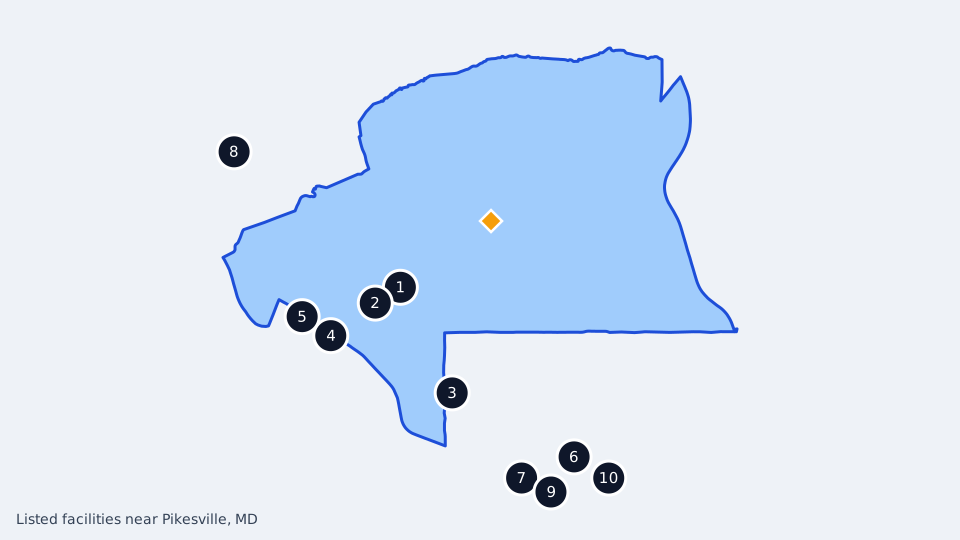
10 options near Pikesville, MD, nearest first. Compare services and locations, then call to check availability.
Call (888) 315-1695Ask about your optionsThis number connects to our central helpline, not directly to a listed facility.
Check which services are available for your needs.
Confirm payment options and any waiting time directly.
Ask what information the program needs from you.
This page lists 10 facilities to help compare options near Pikesville, MD.
Call (888) 315-1695
Addiction treatment centers vary in structure, and understanding the main options helps you narrow the field. At one end, inpatient or residential care involves staying at the program full time. At the other, standard outpatient care may involve one or a few appointments a week.
In between, many programs offer day programs or intensive outpatient tracks for people who need more support than weekly visits but cannot live on site. When you call a center, ask which of these it actually offers and whether it helps people move between levels as needs change.
Call (888) 315-1695Check which services each program reports offering.
Consider travel distance and whether care is in person or remote.
Ask the program directly about payment and coverage.
Confirm how to contact the program and what to expect.
A first call to a treatment center is your chance to gather facts before committing. Useful questions include: What types of counseling and therapy does the program provide? Is medication-supported treatment available if that matters to you?
How does the program involve family, if at all? What happens if someone relapses during treatment? And practically, what are the admission steps, the costs, and the expected start date?
When exploring addiction treatment centers in Maryland, prospective patients and their families often ask the same practical question: how will the cost be covered? Insurance is the most common starting point. Private plans, including those obtained through an employer or the health insurance marketplace, often include behavioral health benefits that apply to addiction treatment, but the details of what is covered, for how long, and at what out-of-pocket cost vary widely, so verifying benefits ahead of time is important.
For those who qualify, public coverage such as Medicaid can significantly reduce or eliminate expenses, though eligibility rules apply and should be confirmed through the appropriate channels. Beyond insurance, many facilities use a sliding-scale fee structure that ties what a person pays to their income, and straightforward self-pay arrangements are also widely used. No single payment path fits everyone, so it makes sense to reach out to a treatment center directly, ask about accepted payment methods, and get a clear picture of the costs before beginning a program.
Start with the kinds of care relevant to your needs.
Check each program’s listed services, location and contact details.
Contact a program to confirm availability, costs and the next step.
A few concrete criteria can help you decide between nearby programs. First, confirm the level of care available and whether the program can adjust it if your needs change. Second, ask what a typical week looks like, including how many hours of counseling or group sessions are involved.
Third, compare logistics: what insurance is accepted, what out-of-pocket costs to expect, and how far the facility is from home or work. Fourth, ask how the program handles relapse or setbacks, since responses vary widely. Writing down answers from each call keeps the comparison honest.
This page lists 10 facilities to help compare options near Pikesville, MD.

For any emergency, the fastest route to help is calling 911. Operators can send medical responders, law enforcement, or both, depending on what the situation calls for. If the concern involves a mental health or substance use crisis but is not immediately life-threatening, calling or texting 988 connects you with the national crisis line, which is staffed around the clock.
Do not wait to see whether a crisis resolves on its own before reaching out.
If you or someone else is in immediate danger, call 911 now.
Call (888) 315-16953635 Old Court Road, Suite 308, Pikesville, MD, 21208
Active
1414 Reisterstown Road, Pikesville, MD, 21208
Active
6999 Reisterstown Road, Suite 4, Baltimore, MD, 21215
Active
1209 Greenwood Road, Pikesville, MD, 21208
Active
3 Greenwood Place, Pikesville, MD, 21208
Active
5616 Park Heights Avenue, Baltimore, MD, 21215
Active
4201 Primrose Avenue, Baltimore, MD, 21215
Active
6 Park Center Court, Suite 210, Owings Mills, MD, 21117
Active
5450 Reisterstown Road, Suite 304, Baltimore, MD, 21215
Active
5260 Park Heights Avenue, Baltimore, MD, 21215
Active
Contact us for more information.
These lists use only what the 10 active facilities listed for Pikesville report to SAMHSA's FindTreatment.gov. No facility pays to be included or can ask to be moved. Reporting more options is not a measure of quality, outcomes or suitability for any person. A missing option means the facility did not report it to the source, not that it is not offered. Call the facility to confirm everything before relying on it.
How this list is made: each facility scores one point for each of these 5 levels of care (settings) it reports to SAMHSA's FindTreatment.gov (Residential (24-hour); Outpatient; Intensive outpatient; Partial hospitalization / day treatment; Hospital inpatient). A facility needs at least 3 to appear. Facilities are shown from the highest count to the lowest; facilities with the same count are in alphabetical order, which has no other meaning. Up to 10 are shown.
How this list is made: each facility scores one point for each of these 7 payment and cost-assistance options it reports to SAMHSA's FindTreatment.gov (Medicaid; Medicare; Private health insurance; Military insurance (TRICARE); Cash or self-payment; Sliding fee scale; Payment assistance). A facility needs at least 4 to appear. Facilities are shown from the highest count to the lowest; facilities with the same count are in alphabetical order, which has no other meaning. Up to 10 are shown.
How this list is made: each facility scores one point for each of these 4 medications used in treatment it reports to SAMHSA's FindTreatment.gov (Buprenorphine; Methadone; Naltrexone; Medication for alcohol use disorder). A facility needs at least 2 to appear. Facilities are shown from the highest count to the lowest; facilities with the same count are in alphabetical order, which has no other meaning. Up to 10 are shown.
How this list is made: each facility scores one point for each of these 12 age groups and client groups accepted it reports to SAMHSA's FindTreatment.gov (Adolescents; Young adults; Adults; Seniors; Pregnant or postpartum women; Adult women; Adult men; Veterans; Active duty military; Criminal justice clients; Clients who have experienced trauma; Co-occurring mental and substance use disorders). A facility needs at least 5 to appear. Facilities are shown from the highest count to the lowest; facilities with the same count are in alphabetical order, which has no other meaning. Up to 10 are shown.
Start with the program's intake line. Ask what a first appointment involves, whether an assessment is done on site, which services the program offers, and what the schedule and cost questions look like before you commit to anything.
You might have a conversation about your health history and what kind of support you're looking for. It's fair to ask about confidentiality, who you'd be working with, and what happens after the first visit before you decide on next steps.
Length of stay depends on the level of care and your individual needs rather than a fixed rule. Residential programs often run for several weeks to a few months, while outpatient care may continue for months with a schedule that adjusts over time. Ask any program you are considering how it decides when someone is ready to step down or finish, since approaches differ.
Yes, and that is a common and useful question to ask early. Many programs offer family sessions, education for loved ones, or separate support for partners and children. Some limit family involvement to certain phases of treatment, while others involve families throughout. Ask each center directly how it includes family and what that looks like in practice.
This is a fair and frequent concern. Most programs build treatment around a combination of individual counseling, group sessions, and education, and you can choose how much you share in groups. Attending an assessment or a first session does not lock you into a program, and you can ask questions before deciding anything. If one approach does not feel right, asking about alternatives is part of normal treatment planning.
Last updated