 National Addiction Treatment Centers

6900 East 10 Mile Road, Center Line, MI, 48015
Active
- Outpatient
- Detox
- Medication-assisted treatment
- Medicaid
City
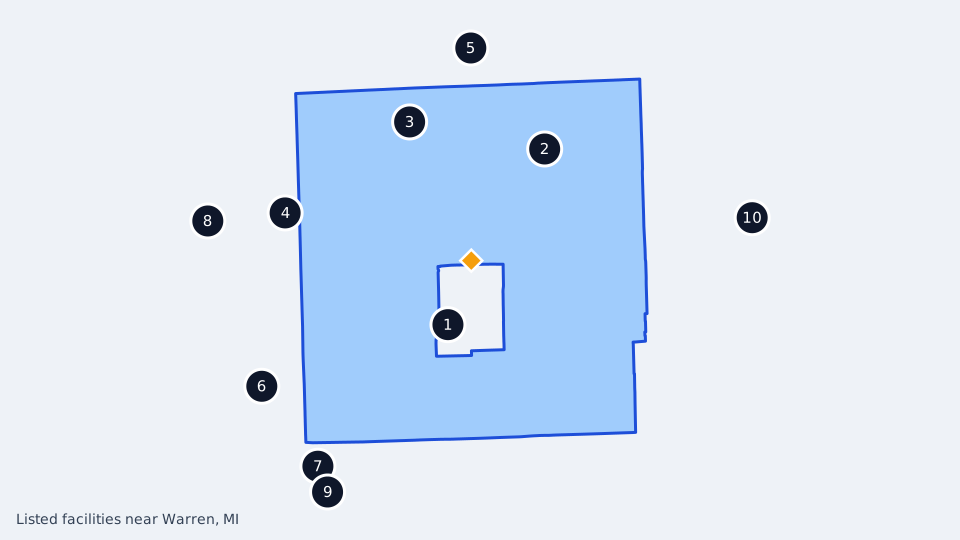
10 options near Warren, MI, nearest first. Compare services and locations, then call to check availability.
Call (888) 315-1695Ask about your optionsThis number connects to our central helpline, not directly to a listed facility.
Check which services are available for your needs.
Confirm payment options and any waiting time directly.
Ask what information the program needs from you.
Reaching out for help with substance use takes courage, and knowing what to ask can make the first call feel less overwhelming. When you contact a program in or around Warren, it helps to describe briefly what you're looking for—such as counseling, medication support, or longer-term care—and ask what services they offer and how their intake process works. You can ask who conducts the first appointment, whether it happens in person or by phone, and what information you'll need to provide.
It's also fair to ask how soon an assessment can be scheduled, what the hours are, and whether a support person can come with you. Because every program is structured differently, the details of a first visit vary; this guide doesn't have verified information about specific intake procedures at individual providers, so it's best to ask each program directly about what to expect when you arrive. Take your time, write down your questions ahead of time, and remember that you're allowed to call more than one place before deciding where you feel comfortable.
Call (888) 315-1695
One of the first things to figure out is how intensive a program you are looking at. A weekly therapy session is very different from a live-in program with a full daily schedule, and addiction treatment centers vary widely in what they provide. At the lighter end, outpatient counseling fits around work and family.
In the middle, day treatment or intensive outpatient programs add structure through frequent sessions without housing. At the most intensive end, residential programs have you live on site so treatment fills the whole day. As you compare, ask whether a center offers more than one level, since programs that span several levels can sometimes adjust your care instead of sending you elsewhere.
Call (888) 315-1695Check which services each program reports offering.
Consider travel distance and whether care is in person or remote.
Ask the program directly about payment and coverage.
Confirm how to contact the program and what to expect.
The first conversation with a treatment center is your interview of them, so come with questions. Ask whether they can describe their approach in plain terms rather than slogans. Ask about staffing: who runs sessions, how many clients they serve, and what happens in an after-hours situation.
Ask about money directly, including total cost, insurance, and any fees not covered in the quoted price. Ask about program length and how they decide when someone completes it. Finally, ask what they provide in the way of ongoing support once the main program ends, since that transition is where many people need the most help.
Figuring out how to pay for care at addiction treatment centers in Michigan is often one of the first questions families ask. The most common approach is private insurance, where the extent of coverage depends on the specific policy and the services involved. For residents who qualify, publicly funded coverage may help reduce or eliminate out-of-pocket expenses, but eligibility should be confirmed with the relevant agency or the facility's admissions staff.
Beyond insurance, some programs adjust their fees on a sliding scale according to what a person can afford, and paying out of pocket is always a possibility for those with the means to do so.
Choosing among addiction treatment centers comes down to a few concrete things you can verify. First, confirm the program addresses your specific needs, whether that is a particular substance, co-occurring mental health concerns, or scheduling limits like work or childcare. Second, ask what the treatment actually consists of, such as individual counseling, group therapy, or medication support, rather than settling for vague descriptions.
Third, get the logistics in writing: length of stay or program duration, total cost, insurance accepted, and what happens if you want to leave early. Fourth, ask about aftercare, since recovery continues after a program ends. Weigh all of this together instead of picking based on distance or a single phone impression alone.
Reaching out for help with substance use takes courage, and knowing what to ask can make the first call feel less overwhelming.

When safety is at stake, treatment centers are not the right first call, emergency services are. Dial 911 for overdoses, medical emergencies, violence, or any situation where someone could be seriously harmed, and give the dispatcher clear facts about what you are seeing. A hospital emergency department can stabilize someone and start whatever care is needed, including referrals to longer-term treatment afterward.
If the crisis is emotional or psychiatric rather than medical, the 988 Suicide and Crisis Lifeline offers free, confidential support by phone or text at any time. Once the immediate danger has passed, you can return to comparing treatment options.
If you or someone else is in immediate danger, call 911 now.
Call (888) 315-16956900 East 10 Mile Road, Center Line, MI, 48015
Active
12200 East 13 Mile Road, Suite 200, Warren, MI, 48093
Active
31851 Mound Road, Warren, MI, 48092
Active
1400 East 12 Mile Road, Madison Heights, MI, 48071
Active
34208 Van Dyke Avenue, Sterling Heights, MI, 48312
Active
704 East 9 Mile Road, Hazel Park, MI, 48030
Active
19940 Conant Street, Suites A, B and C, Detroit, MI, 48234
Active
1500 North Stephenson Highway, Suite 220, Royal Oak, MI, 48067
Active
19211 Anglin Street, Detroit, MI, 48234
Active
18441 Utica Road, Roseville, MI, 48066
Active
Contact us for more information.
These lists use only what the 10 active facilities listed for Warren report to SAMHSA's FindTreatment.gov. No facility pays to be included or can ask to be moved. Reporting more options is not a measure of quality, outcomes or suitability for any person. A missing option means the facility did not report it to the source, not that it is not offered. Call the facility to confirm everything before relying on it.
How this list is made: each facility scores one point for each of these 5 levels of care (settings) it reports to SAMHSA's FindTreatment.gov (Residential (24-hour); Outpatient; Intensive outpatient; Partial hospitalization / day treatment; Hospital inpatient). A facility needs at least 3 to appear. Facilities are shown from the highest count to the lowest; facilities with the same count are in alphabetical order, which has no other meaning. Up to 10 are shown.
How this list is made: each facility scores one point for each of these 7 payment and cost-assistance options it reports to SAMHSA's FindTreatment.gov (Medicaid; Medicare; Private health insurance; Military insurance (TRICARE); Cash or self-payment; Sliding fee scale; Payment assistance). A facility needs at least 4 to appear. Facilities are shown from the highest count to the lowest; facilities with the same count are in alphabetical order, which has no other meaning. Up to 10 are shown.
How this list is made: each facility scores one point for each of these 4 medications used in treatment it reports to SAMHSA's FindTreatment.gov (Buprenorphine; Methadone; Naltrexone; Medication for alcohol use disorder). A facility needs at least 2 to appear. Facilities are shown from the highest count to the lowest; facilities with the same count are in alphabetical order, which has no other meaning. Up to 10 are shown.
How this list is made: each facility scores one point for each of these 12 age groups and client groups accepted it reports to SAMHSA's FindTreatment.gov (Adolescents; Young adults; Adults; Seniors; Pregnant or postpartum women; Adult women; Adult men; Veterans; Active duty military; Criminal justice clients; Clients who have experienced trauma; Co-occurring mental and substance use disorders). A facility needs at least 5 to appear. Facilities are shown from the highest count to the lowest; facilities with the same count are in alphabetical order, which has no other meaning. Up to 10 are shown.
Start by asking each program what services they actually provide, how their intake process works, and whether they can see you within a timeframe that fits your situation. Consider practical factors like location, scheduling, and whether the program's approach feels like a good match for you. Calling a few programs and comparing their answers is a reasonable and common step.
Good questions include: what services do you offer, who will I meet with at the first appointment, how long does the intake process take, what should I bring, and is there anything that would make someone ineligible? You can also ask about cost and coverage, though details vary by program and should be confirmed directly with each provider before you commit.
The initial conversation is a two-way interview. You will be asked about what you are using, how often, your physical and mental health, and any past treatment. You should also be told what programs the center offers, what they cost, and how insurance applies. A good intake leaves you with a clearer picture of your options, not pressure to enroll on the spot.
For outpatient care, yes, most programs expect clients to keep working and schedule sessions early, late, or on weekends accordingly. More intensive day programs may require you to cut back on hours temporarily. Live-in residential programs are the hardest to combine with a job, though some employers offer leave options worth asking about. Before enrolling anywhere, confirm the exact weekly time commitment in writing so there are no conflicts with your obligations.
Expect a range, not one number. A short residential stay might last a few weeks, while longer programs run ninety days or more. Outpatient care is usually measured in weeks or months of scheduled sessions. Many people also move between levels, starting intensive and stepping down over time. When you call a center, ask what their typical program lengths are and what factors would make yours shorter or longer.
Last updated